
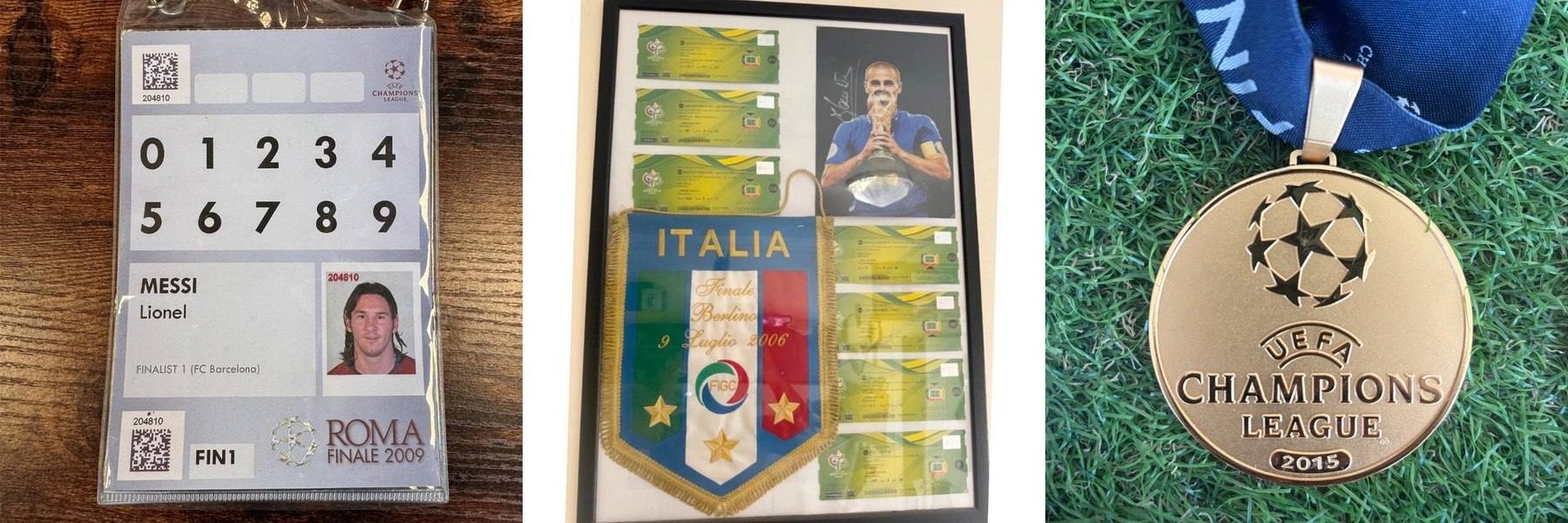
- People collect shirts and boots, but also balls, medals, tickets, accreditations, pennants.
- Value comes from rarity, historic moment, protagonist, proof and condition.
- Documented provenance is what separates a piece of memorabilia from a mere object.
- A collection with a theme stands the test of time, and of the market.
Sports collecting is a form of memory. Whoever holds the shirt from a final or the accreditation for a historic match owns more than an object: they own a piece of that night. That is what drives collectors all over the world to search, study and look after memorabilia, sometimes for a lifetime.
What people collect in sport
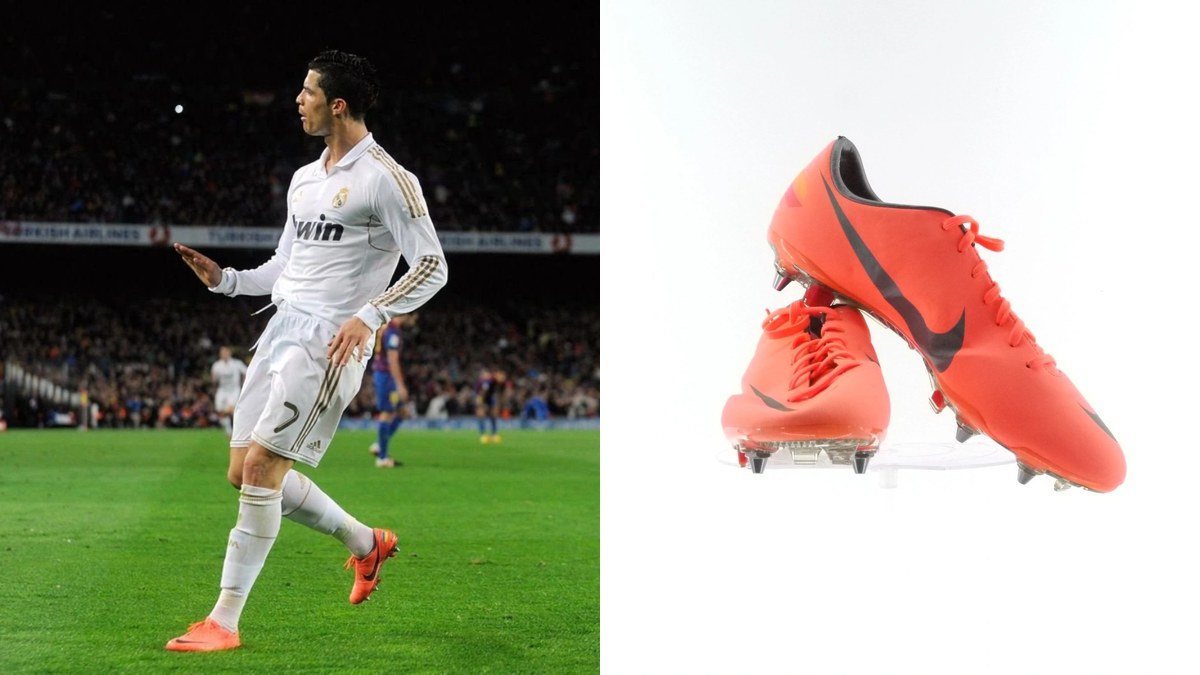
Then there are balls, Formula 1 helmets and models, rackets, casts, even turf from historic stadiums. Every sport has its iconic objects.
What makes a piece unique
- Rarity: how many really exist? A shirt worn in a single match is rarer than one prepared for a whole season.
- The moment: a final, a decisive goal, the last match of a career.
- The protagonist: the champion's story is reflected in the object.
- Proof: match photos, provenance from the club or player, verifiable certificates.
- Condition: integrity, colours, any signs of use consistent with the object's story.
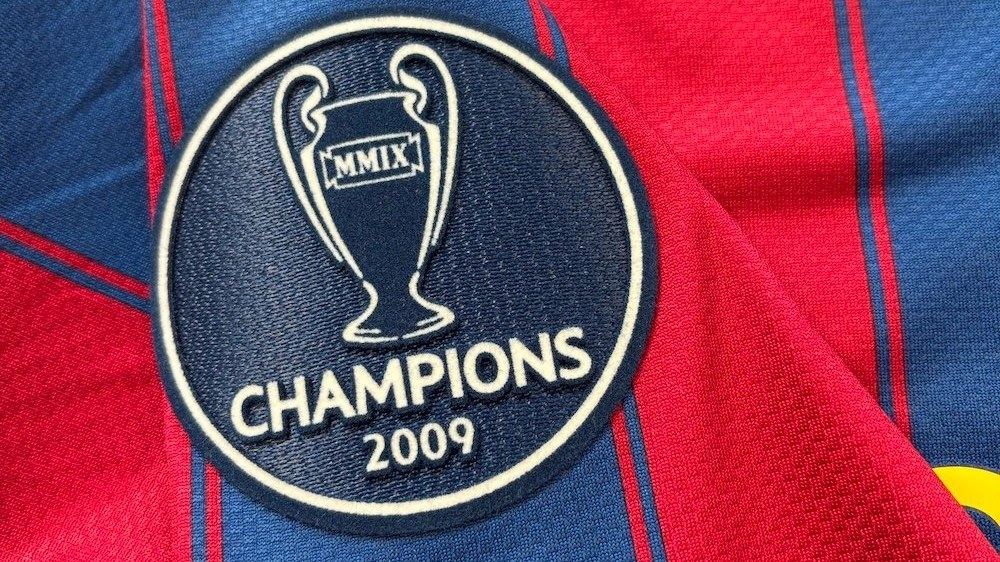
Provenance: the real added value
Two identical objects can be worth very different amounts. What makes the difference is their documented history: where they come from, who owned them, what proof comes with them. A piece with traceable provenance resells better, is easier to insure and, above all, can be collected without doubts.
That is why every item sold on Memorabid can come with a certificate bearing a serial code and two NFC tags: one on the certificate and one on the object. Its story follows it even when, one day, it changes hands.
Discover the certificates of authenticityCOA, COO and NFC tags: how they work.How to start a collection
- Choose a theme: a team, a competition, an era, a champion.
- Set a budget and stick to it: one important piece beats ten impulse buys.
- Study: compare closed auctions, learn to read descriptions, tell match-worn, prepared and store apart.
- Buy with proof: no proof, no purchase.
- Document everything: keep photos, certificates, receipts.
Display and storage
A piece deserves to be seen, but light is the enemy of fabrics and inks. Frames with UV-protective glass, closed cases, dry rooms away from direct sunlight protect the collection over time. Items not on display should be stored in breathable covers, without folds and with nothing on top.
Collecting and charity
Many pieces come from the champions themselves, who donate them to support charitable projects. Clubs, federations and foundations auction them, and collectors take home a unique piece while supporting a cause. It is an important part of Memorabid's work: dozens of non-profit organisations have already raised funds through our auctions.
Frequently asked questions
What is sports memorabilia?
Objects linked to an athlete, a team or a sporting event: shirts, boots, balls, medals, tickets, accreditations, pennants, cards and much more.
How do I understand the value of a piece?
Rarity, historic moment, protagonist, proof of authenticity and condition all count. Comparing closed auctions of similar items is the most concrete reference.
Where do I start a sports collection?
With a theme you love and a clear budget. Then one piece at a time, always with proof of authenticity and paperwork.
Do items sold on Memorabid come with a certificate?
Yes: you can request the COA for Memorabid Auctions or the COO for the Marketplace, both with a serial code and two NFC tags.
 Memorabid Editorial TeamThe team that selects, photographs and checks the items auctioned on Memorabid.